

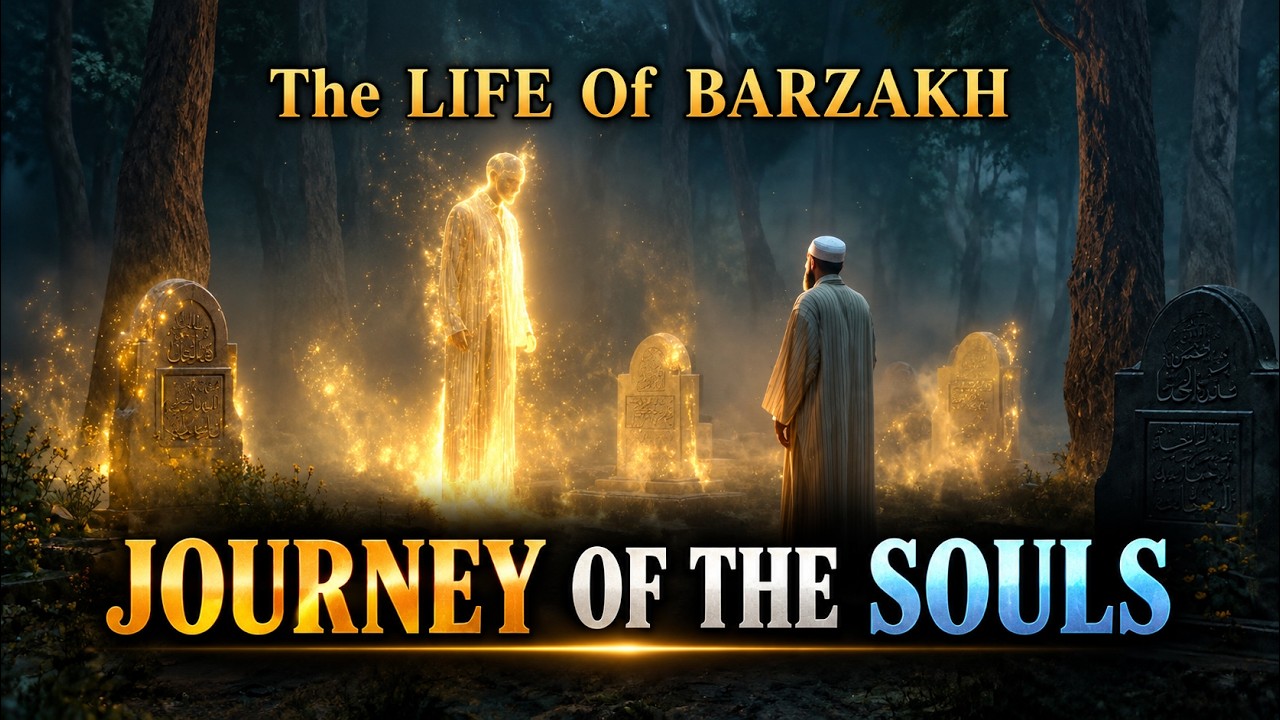
THE LIFE OF BARZAKH – JOURNEY OF THE SOULS IN ISLAM (Full Documentary)
A Profound AI-Generated Spiritual Exploration of the Afterlife, the 7 Heavens, and Divine Mercy
1. Synopsis: The Unseen Journey of the Ruh
This profound cinematic documentary explores the ultimate journey of the human soul (Ruh) after death, as described in the Quran and authentic Hadith. From the gentle (or harsh) extraction of the soul by the Angel of Death, to its awe-inspiring ascent through the 7 layered heavens, the film visualizes the unseen realms of Islamic eschatology. It details the critical questioning by Munkar and Nakir in the grave, the mysterious intermediate state of Barzakh, and the varying conditions of souls—from the prophets and martyrs resting in peace, to those awaiting judgment. The narrative also beautifully recounts the miraculous Night Journey (Isra and Miraj) of the Prophet Muhammad ﷺ, illustrating his ascent past Sidrat al-Muntaha to the divine presence. Crafted with the utmost reverence, this production uses abstract, atmospheric AI-generated visuals to depict these sacred concepts without ever showing the physical likeness of any holy figure, focusing instead on cosmic grandeur, divine light, and spiritual symbolism.
2. AI Cinematic Review: 8.7/10
The Life of Barzakh is a masterful and deeply respectful achievement in AI-generated educational storytelling, successfully translating complex Islamic theological concepts into a visually stunning and emotionally resonant experience.
- Narrative Execution & Spiritual Tone (9/10): The script brilliantly weaves together Quranic verses, Hadith, and cosmic science (like the expanding universe and galactic structures) to create a cohesive, awe-inspiring narrative. The pacing is deliberate and meditative, perfectly matching the gravity of the subject matter.
- Visual Fidelity & Respectful AI Consistency (8.5/10): The AI handles the delicate requirement of depicting the unseen (Al-Ghaib) with exceptional artistic grace. By utilizing cosmic imagery, abstract light formations, and majestic natural landscapes instead of human figures for sacred entities, the film maintains strict adherence to Islamic guidelines while remaining visually captivating.
- Atmospheric & Sound Design (8.5/10): The audio landscape is deeply immersive. The combination of a reverent, soothing synthetic narration, subtle ambient soundscapes (cosmic winds, gentle echoes), and the absence of inappropriate music creates a profoundly spiritual and contemplative viewing environment.
3. The AI Recipe (Technical Autopsy)
Creating a respectful, feature-length spiritual documentary requires a highly specialized and careful blend of generative pipelines. Here is an autopsy of Religious Story TV's likely workflow:
- Imagery & Setting (Midjourney v6): The cosmic landscapes, the 7 heavens, Sidrat al-Muntaha, and abstract representations of divine light were crafted using Midjourney v6. Heavy use of negative prompts (
--no human face, person, figure) and specific style weights (--sw) ensured the visuals remained atmospheric, majestic, and fully compliant with Islamic artistic traditions. - Video Generation & Motion (Runway Gen-3 Alpha / Kling AI): Generating dynamic cosmic sequences—such as the expansion of the universe, the swirling of galaxies, and the gentle flow of abstract light—requires advanced temporal coherence. Models like Runway Gen-3 or Kling AI are ideal for handling complex, slow-panning environmental effects without breaking the serene framing.
- Voice Acting & Audio Layering (ElevenLabs): The deep, calm, and authoritative synthetic narration is a textbook application of ElevenLabs' dynamic voice synthesis. The careful layering of ambient sounds (without musical instruments) enhances the emotional and spiritual gravity of the documentary.
“ Creator Spotlight:
This profound and respectful spiritual AI documentary was produced by Religious Story TV. To support their work in adapting classical Islamic teachings into stunning, compliant visual cinema, please visit and subscribe to their Official YouTube Channel. ”



0 Comments